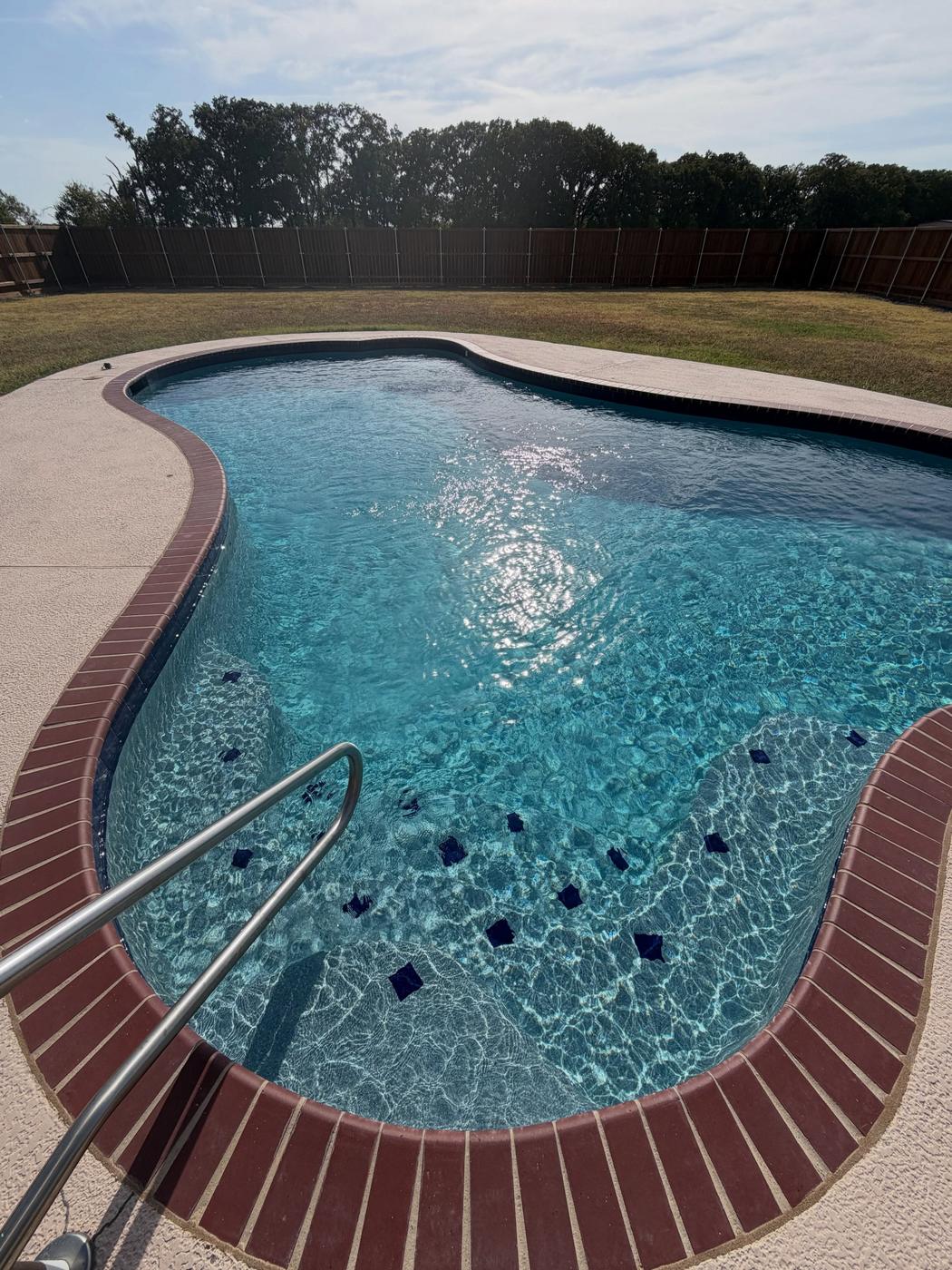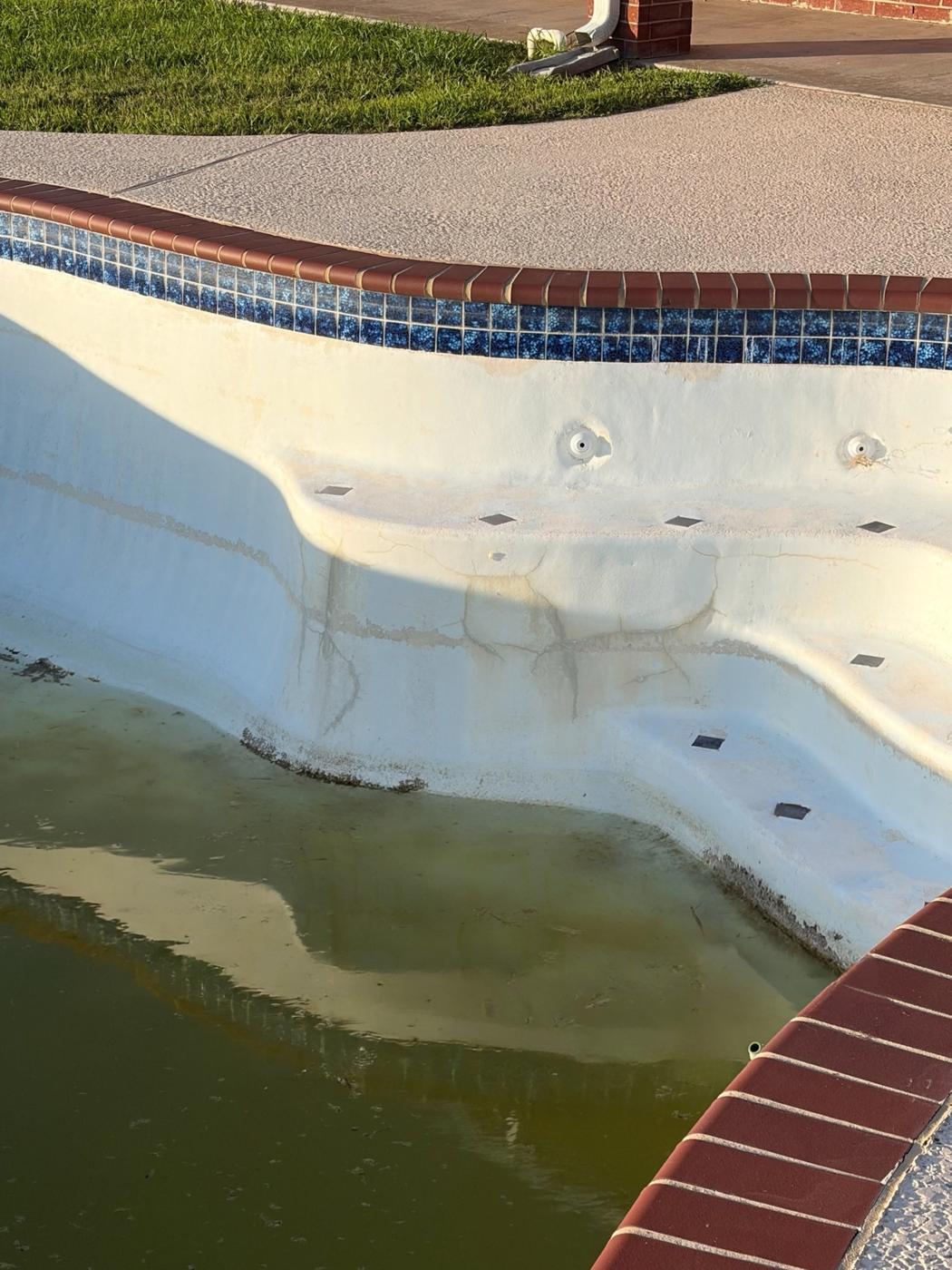
How to Get Rid of Green Pool Water (Algae) Fast
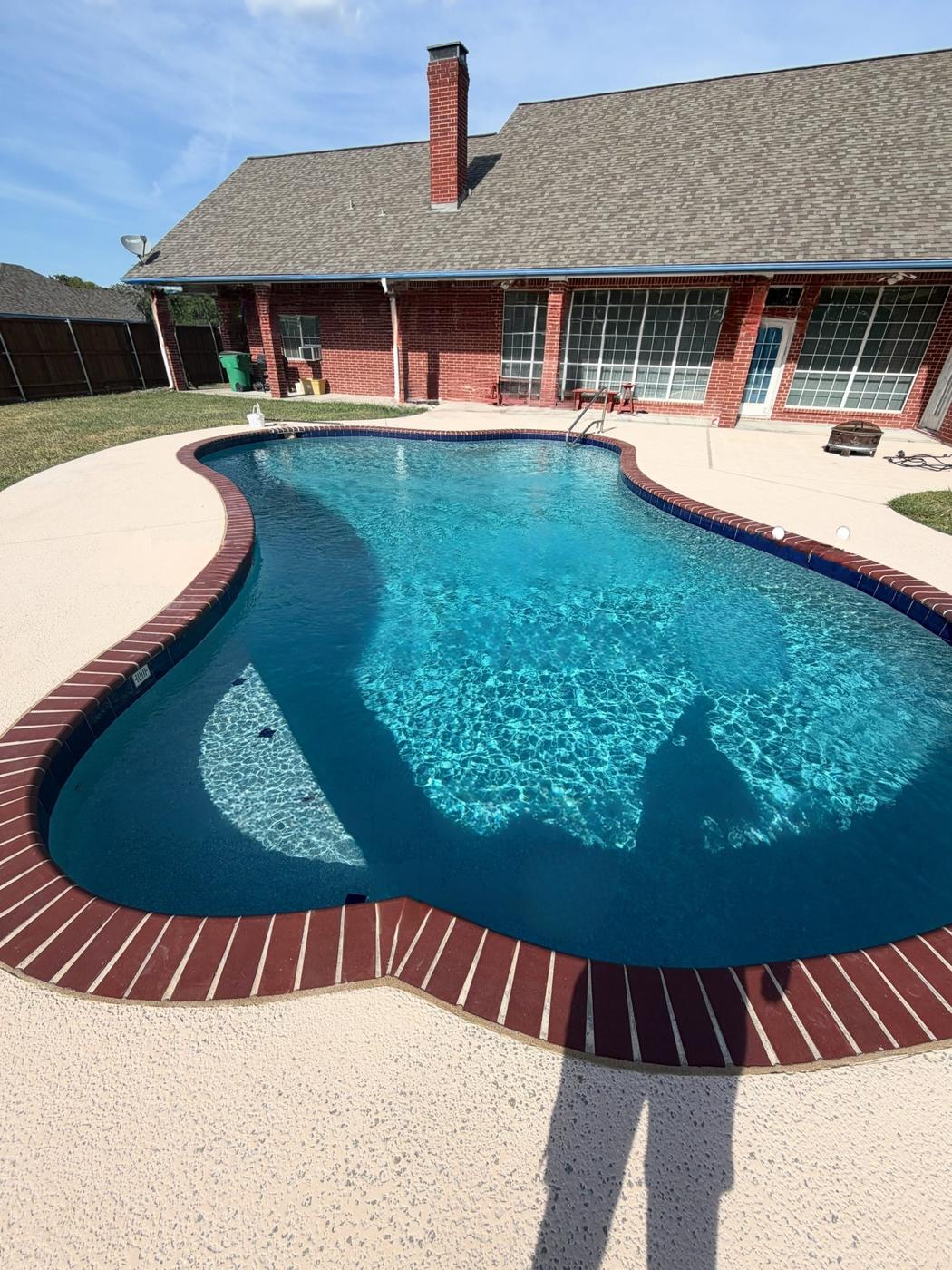
There's nothing quite like pulling back the cover — or just walking outside — to find your pool has turned green overnight. Green water means algae, and in the Texas heat it can take hold fast. The good news: almost any green pool can be cleared. The key is doing the steps in the right order instead of just dumping in chlorine and hoping.
What causes green pool water?
Algae blooms when three things line up: low or inconsistent sanitizer (chlorine), unbalanced pH/alkalinity, and poor circulation. In North Texas, our long warm season and occasional heavy rains that wash debris and phosphates into the pool make algae especially aggressive from late spring through early fall.
Step 1: Test and balance the water
Before you add anything, test the water. If your pH is high, chlorine becomes far less effective — you can dump in a shocking amount of chlorine and still lose to the algae. Bring pH down to the 7.2–7.4 range and adjust total alkalinity first. This is the step most homeowners skip, and it's why their green pool stays green.
Step 2: Brush and skim everything
Algae clings to walls, steps, and corners. Brush the entire pool — walls, floor, steps, and the tile line — to break the algae loose so the sanitizer and filter can actually reach it. Skim and remove any leaves or debris, since decaying organic matter eats up your chlorine.
Step 3: Shock the pool
A green pool needs a heavy dose of chlorine — a shock treatment, often 2–3 times the normal amount. For a severe bloom, you may need to shock to a very high level and let the pump run continuously. Use a calcium hypochlorite or sodium hypochlorite shock and add it in the evening so sunlight doesn't burn it off.
Step 4: Run the filter and clean it
Run the pump 24/7 until the water clears. The filter is doing the heavy lifting now, physically removing the dead algae. Check and clean the filter regularly during this process — a green pool will clog a filter fast. If you have a cartridge filter, hose it off; for a DE or sand filter, backwash as needed.
Step 5: Use an algaecide and clarifier
Once the chlorine has done the killing, an algaecide helps prevent a rebound and a clarifier helps the tiny dead particles clump together so the filter can capture them. Don't add algaecide before shocking — some products react with high chlorine. Follow the label directions and the order matters.
Step 6: Vacuum the dead algae
After the algae is dead and settled, you'll often see a layer on the floor. Vacuum to waste (if your filter allows) so you're not just pushing it back through the system. This is the step that takes a cloudy pool to genuinely clear.
How to keep it from coming back
- Maintain consistent chlorine levels — don't let it drift to zero
- Keep pH and alkalinity balanced so your chlorine actually works
- Run the pump long enough each day (typically 8–12 hours in summer)
- Clean the filter regularly and backwash when pressure rises
- Skim and brush weekly so algae never gets a foothold
- Use a weekly algaecide or phosphate remover if your pool is prone to blooms
Most green pools we clear in a single visit. The secret isn't a magic chemical — it's doing the steps in the right order and balancing the water before you shock.
Don't want to tackle it yourself?
A green-to-clean recovery is one of the most common jobs we handle across Greenville, Rockwall, and Hunt County. If your pool is green and you'd rather have it handled professionally — with the right chemicals, the right order, and a clear timeline — request a free quote and we'll get your water back to crystal-clear.
Frequently asked questions
How long does it take to clear a green pool?+
A mildly green pool can clear in 1–3 days with proper shocking and filtration. A severe bloom may take up to a week. The biggest factor is keeping the filter running and cleaning it as it clogs with dead algae.
Can I just add chlorine to a green pool?+
Chlorine alone often isn't enough. If your pH is high, the chlorine won't work well, and you need to brush the algae loose and run the filter. Balancing the water first, then shocking, is what actually clears it.
Is green pool water dangerous?+
Algae itself isn't usually harmful, but the bacteria that thrive alongside low-sanitizer water can be. We don't recommend swimming in a green pool — clear it first, then swim.
Need help with your pool?
Kingdom Pools LLC is a family-owned pool service, repair, and remodeling company in Greenville, TX. We serve Greenville, Rockwall, Royse City, and the surrounding Hunt County communities. Get a free, no-obligation quote today.